EGR203 Electric/Electronic Circuits Assignment 2
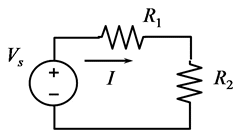
- For the following circuit, find (a) the value of the current
I, (b) the value of the voltage across each resistor, and (c)
the power absorbed or produced in each element.
| Vs
| R1 | R2
|
| 12 Volts | 180 Ω | 220 Ω
|
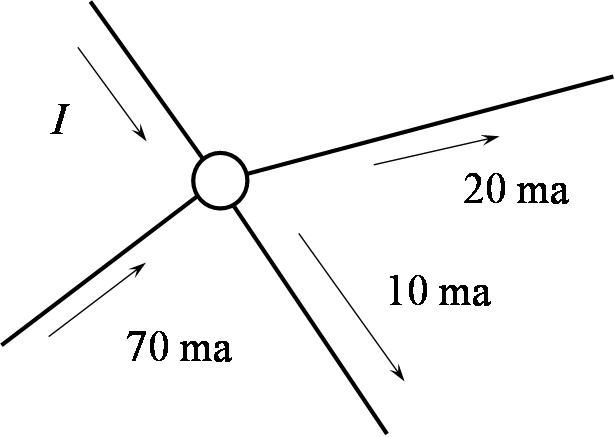
- Find the value of the current I flowing into the node.
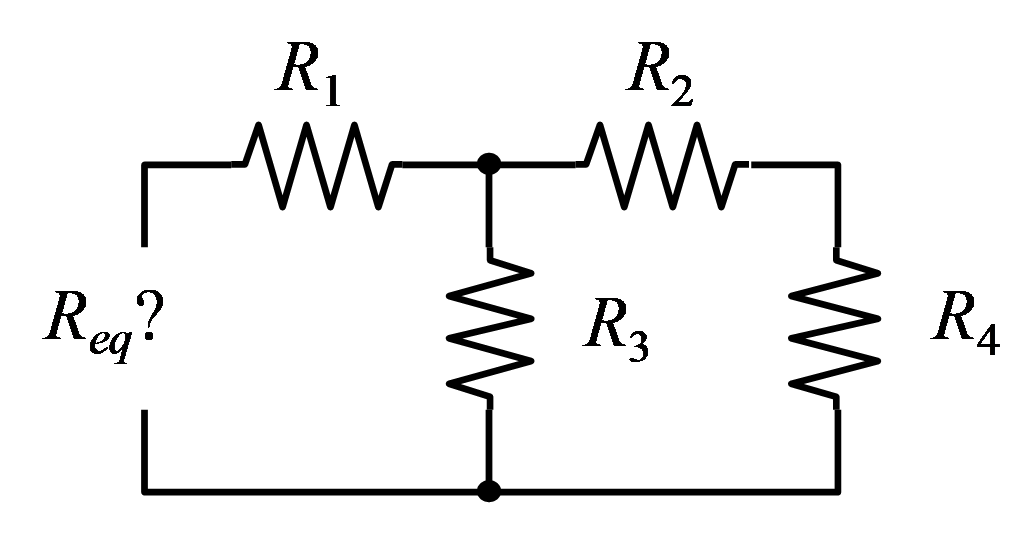
- Given the following circuit, find the equivalent resistance Req across the
indicated points.
| R1 | R2 | R3 | R4
|
| 330 Ω | 110 Ω | 230 Ω | 120 Ω
|
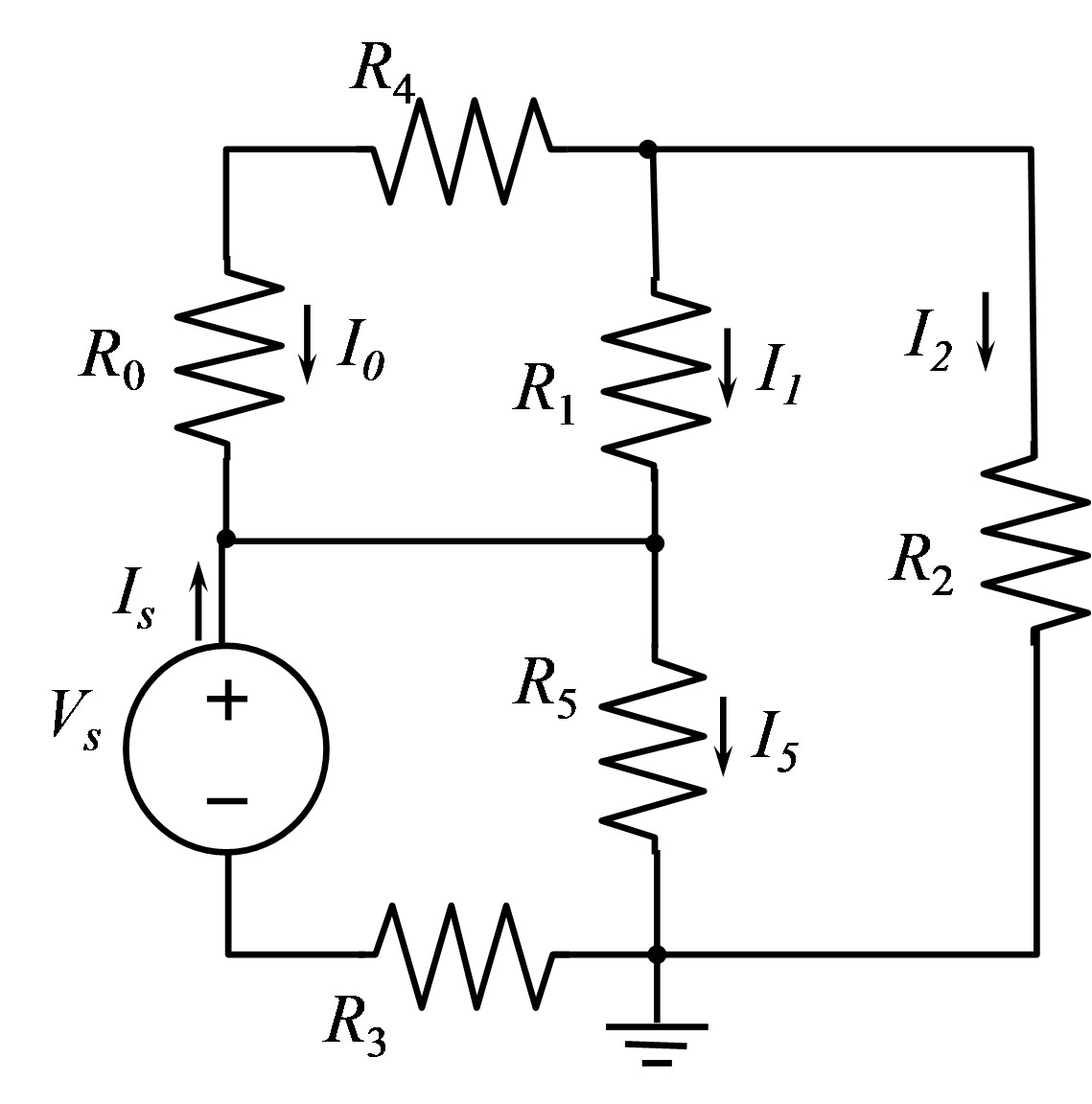
- Use KCL to determine the unknown currents I2 and I5 in the circuit below.
Assume I0 = -2 A, I1 = -4 A,
IS = 6 A, and VS = 8 V.
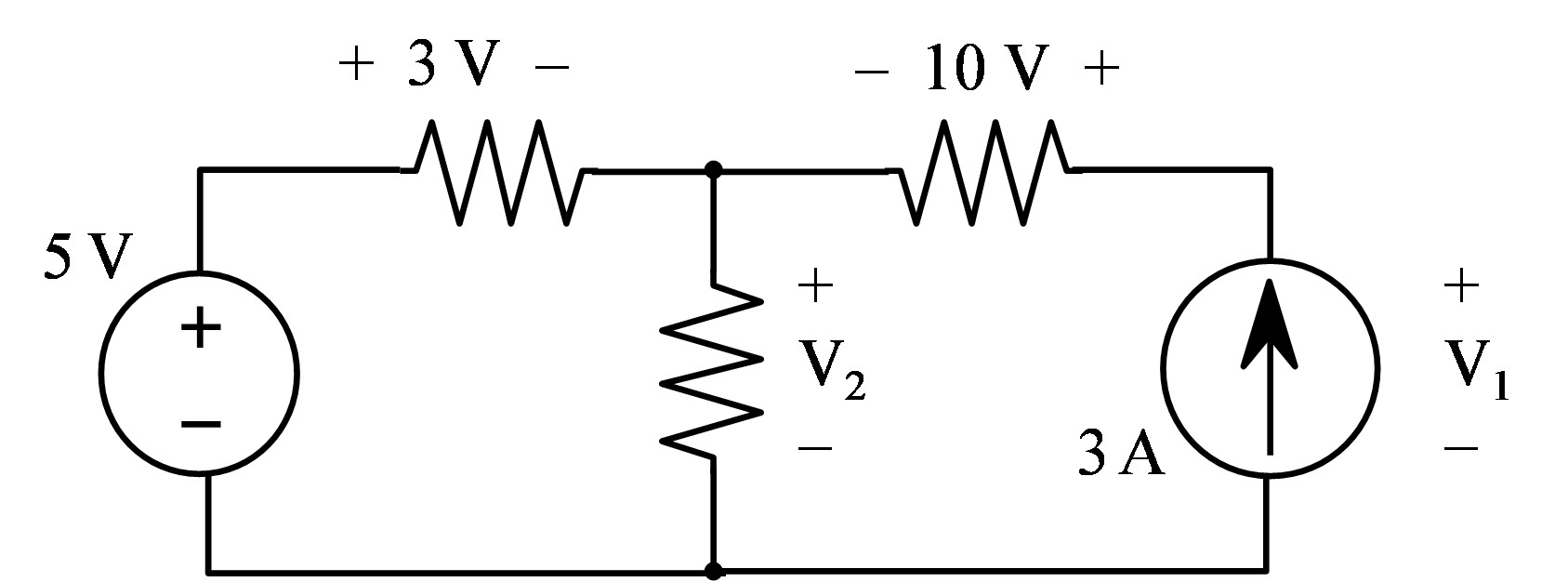
- Apply KVL to find V1 and V2
in the circuit below.
- In the circuits below, the directions of current and polarities
of voltage have already been defined. Find the actual values of the currents
and voltages using those sign conventions.
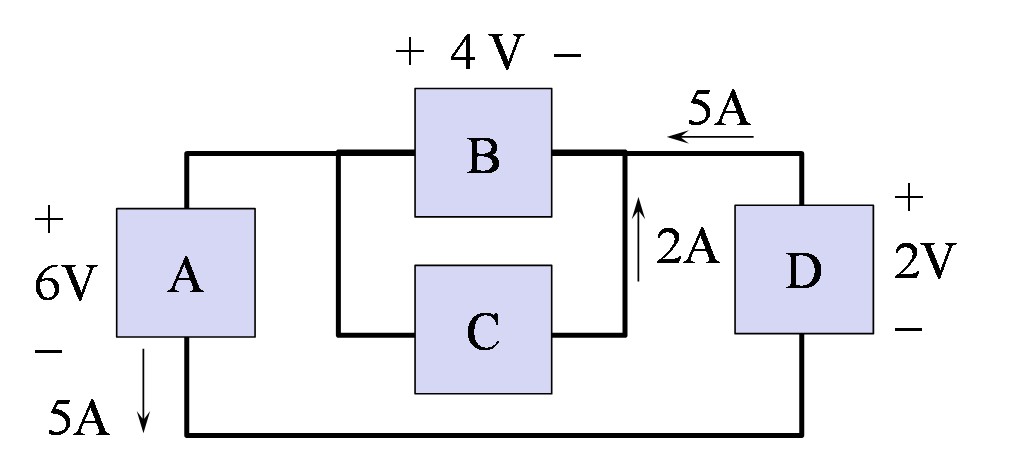
- In the circuit below, determine which components are supplying
power and which are dissipating power. Also determine the total
power supplied or dissipated.
- An incandescent lightbulb rated at 40 W will dissipate 40 W as
heat and light when connected across a 120-V ideal voltage source.
A 60-W bulb will dissipate 60 W when connected across the same source.
If the bulbs are connected in series across the same source, determine the
power that each of the two bulbs will dissipate. Assume that the change in
resistance of light-bulb(s) filaments as a function of temperature is negligible
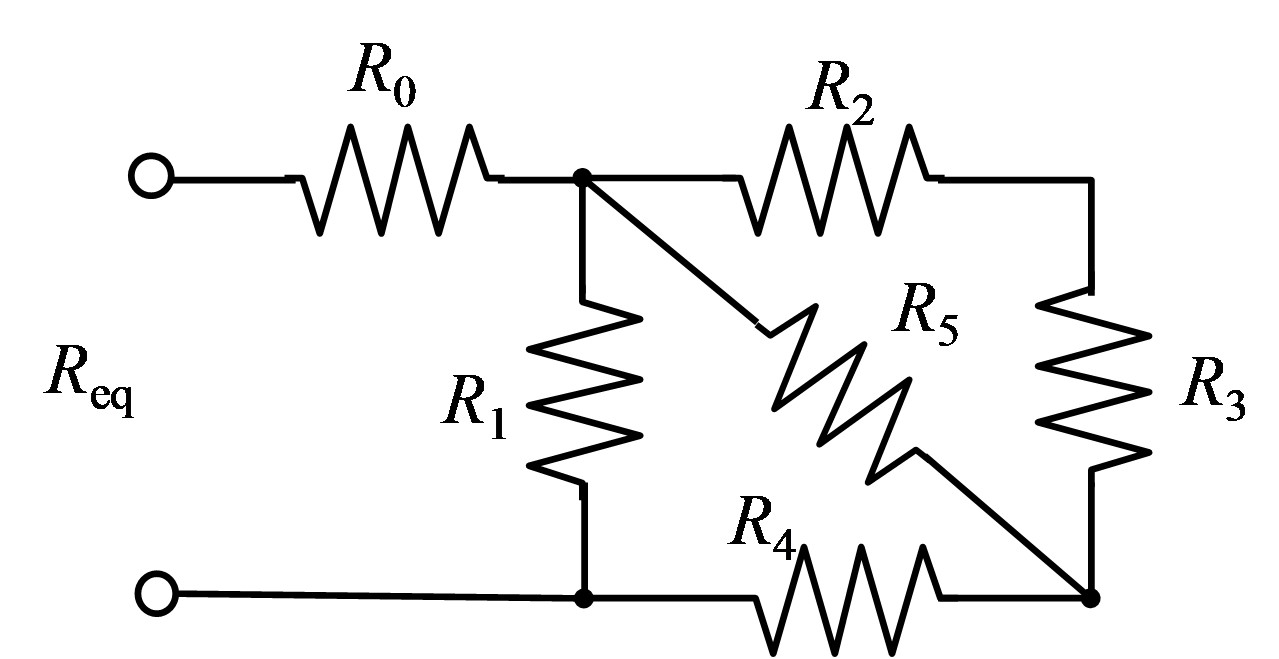
- Find the equivalent resistance of the circuit below by combining resistors
in series and parallel. Assume R0 = 8 Ω, R1 = 16 Ω,
R2 = 12 Ω, R3 = 6 Ω, R4 = 20 Ω,
and R5 = 4 Ω.
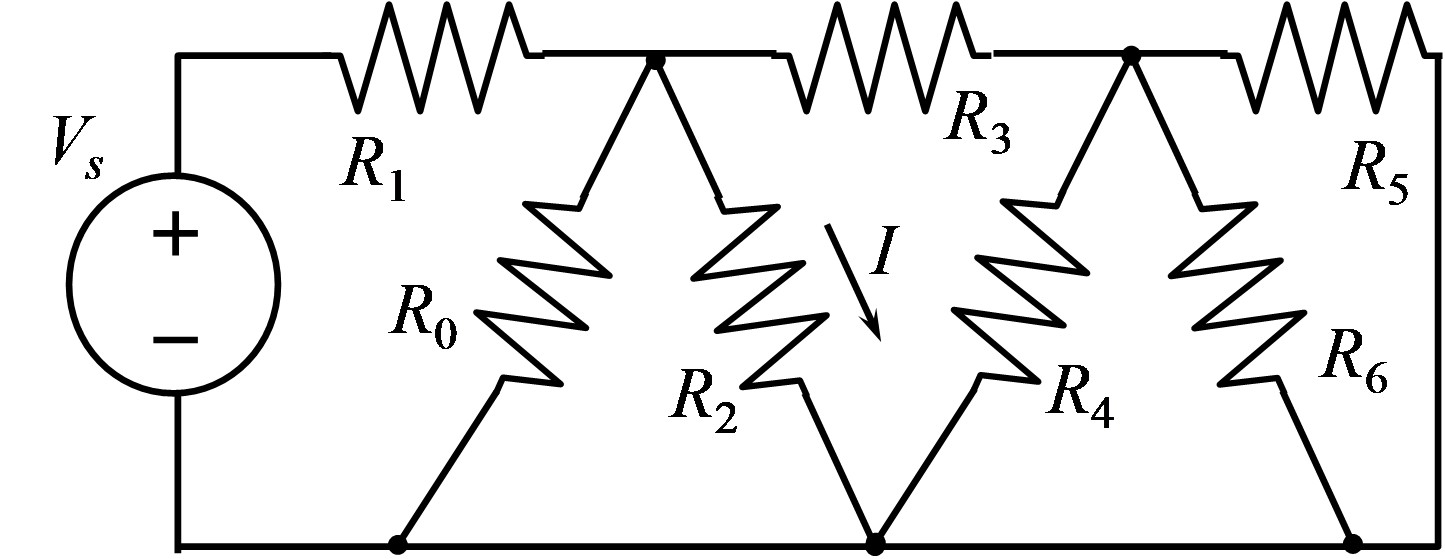
- Find the equivalent resistance of the circuit below and the current I.
Assume VS = 12 V, R0 = 40 Ω, R1 = 20 Ω,
R2 = 80 Ω, R3 = 50 Ω, R4 = 100 Ω,
R5 = 120 Ω, and R6 = 60 Ω.
Maintained by John
Loomis, last updated 23 January 2013